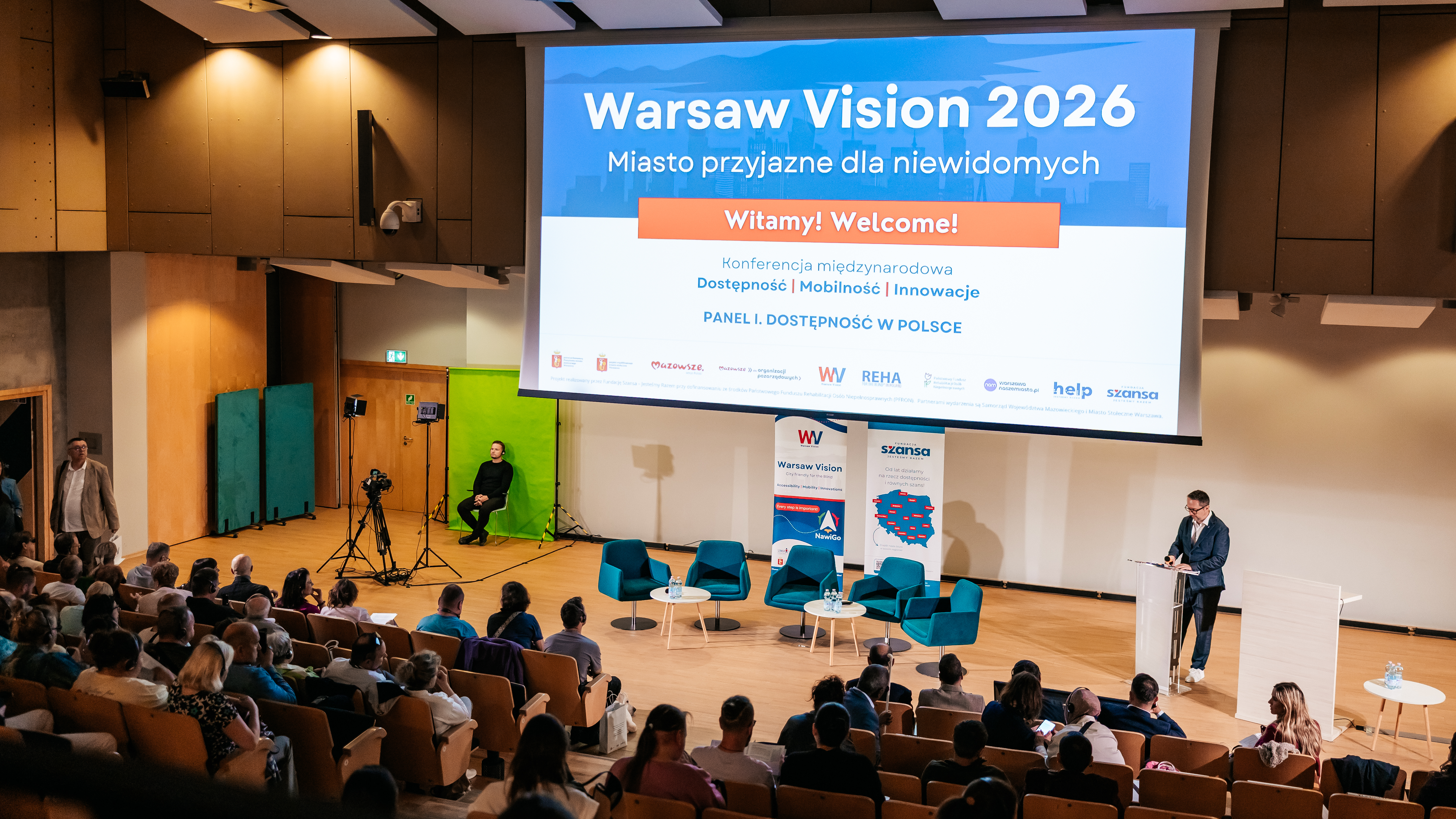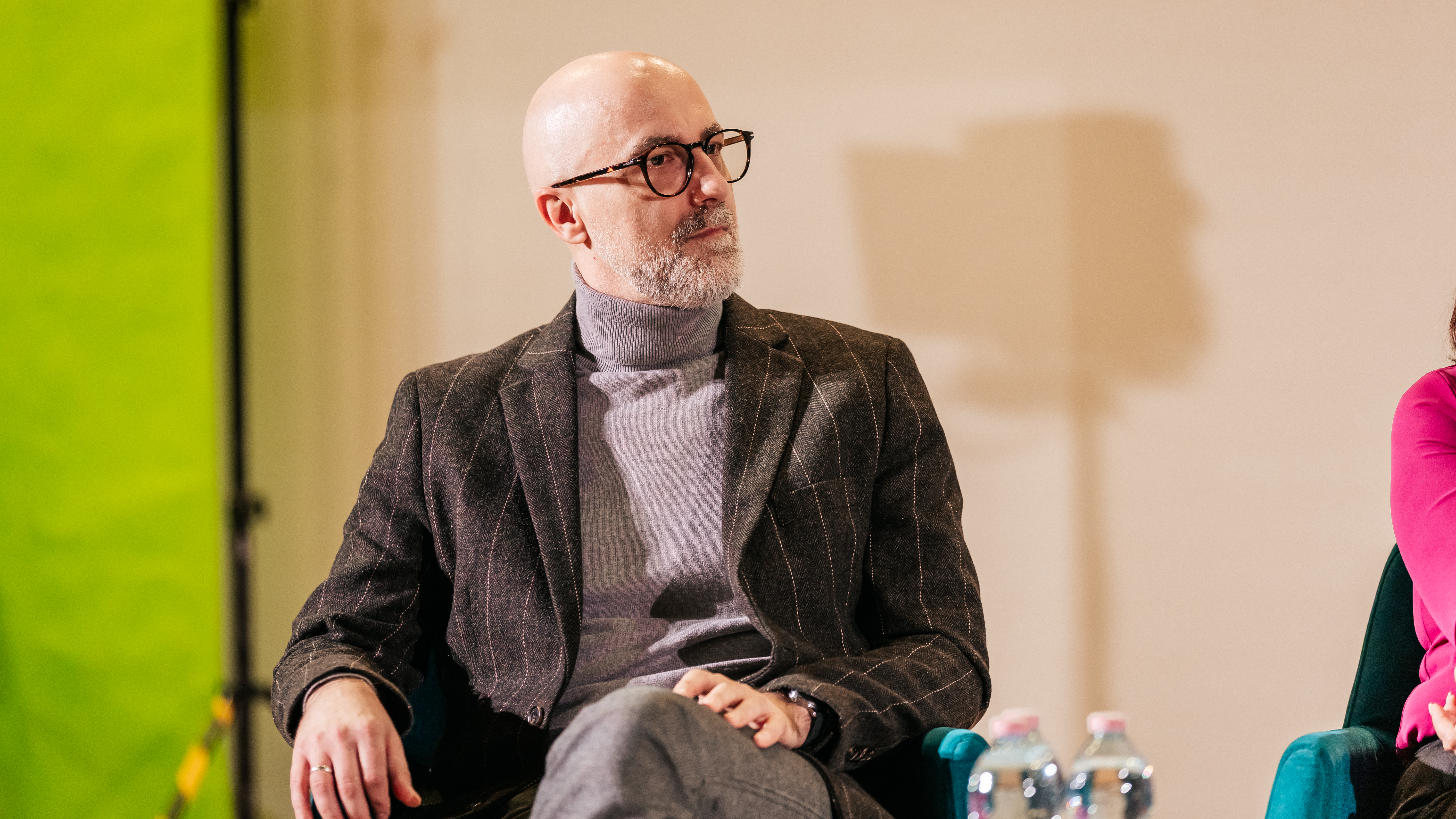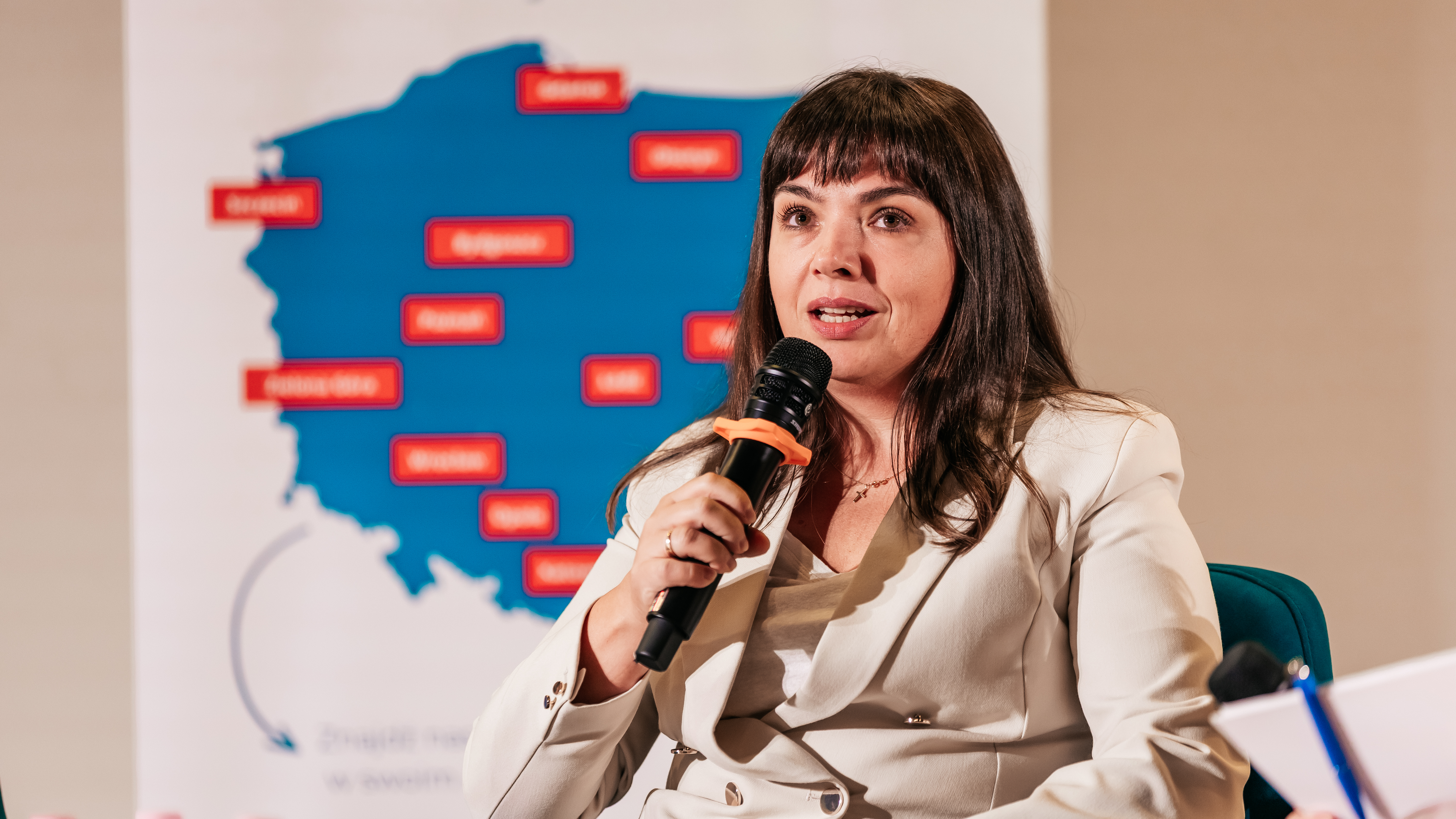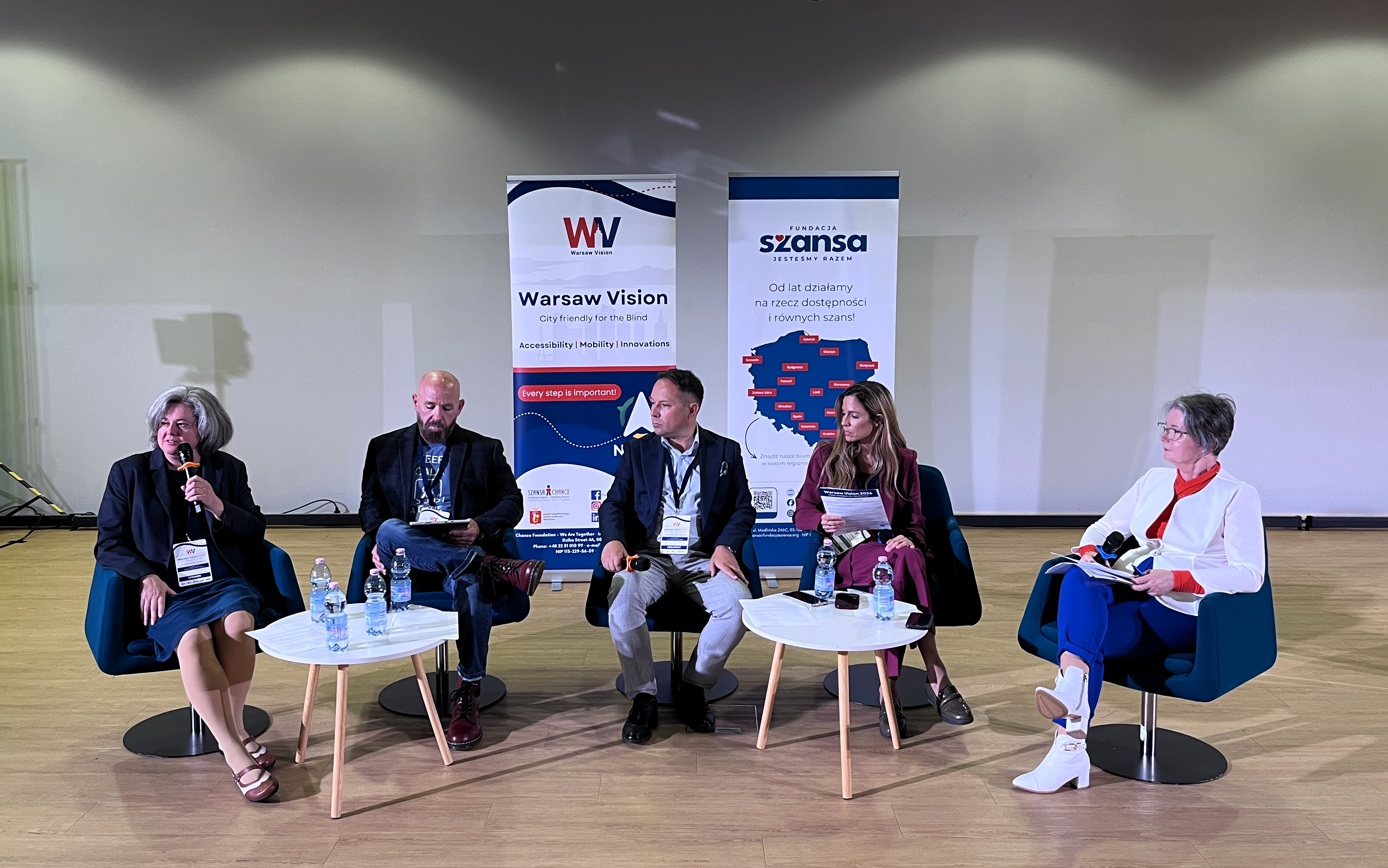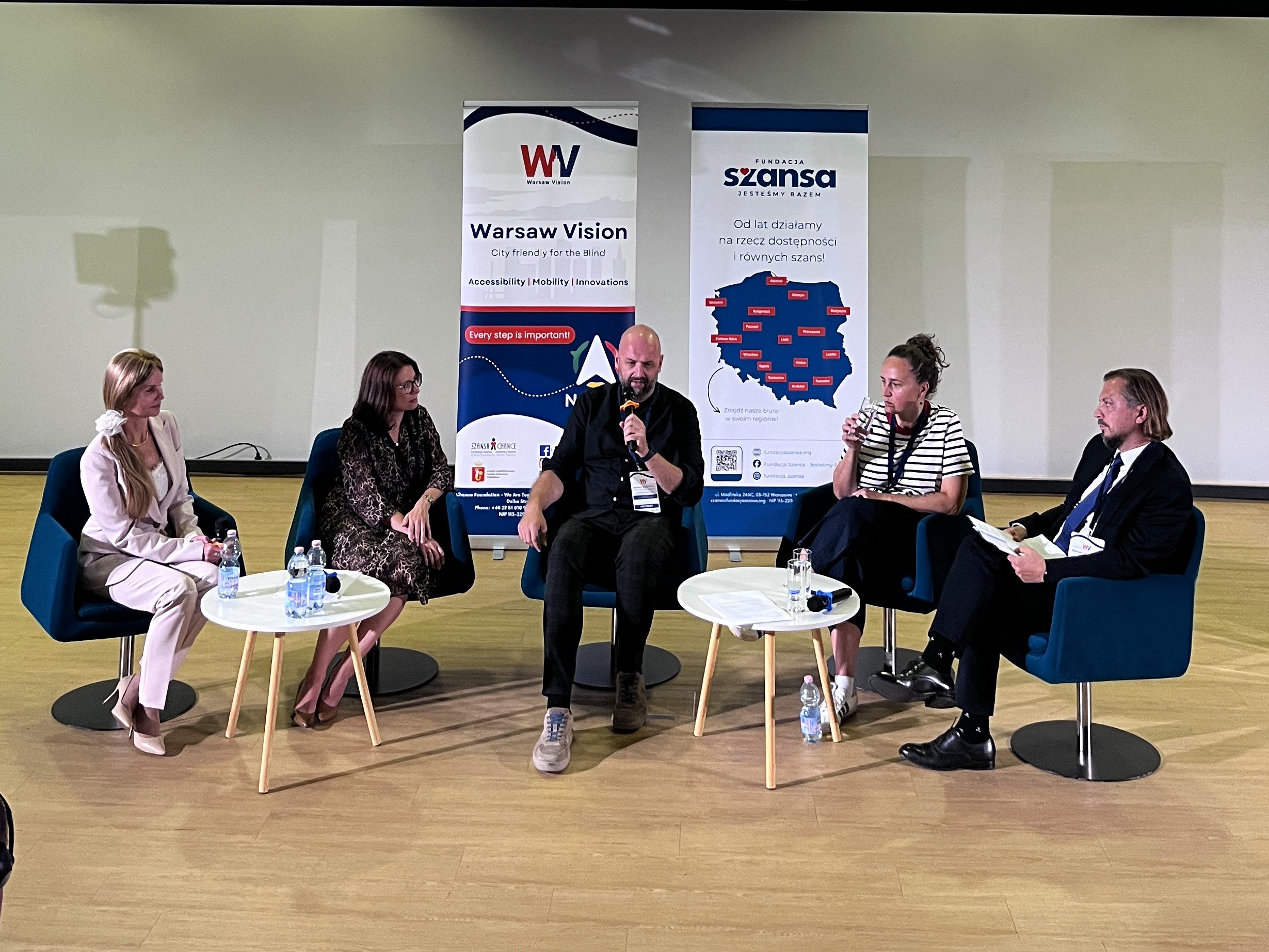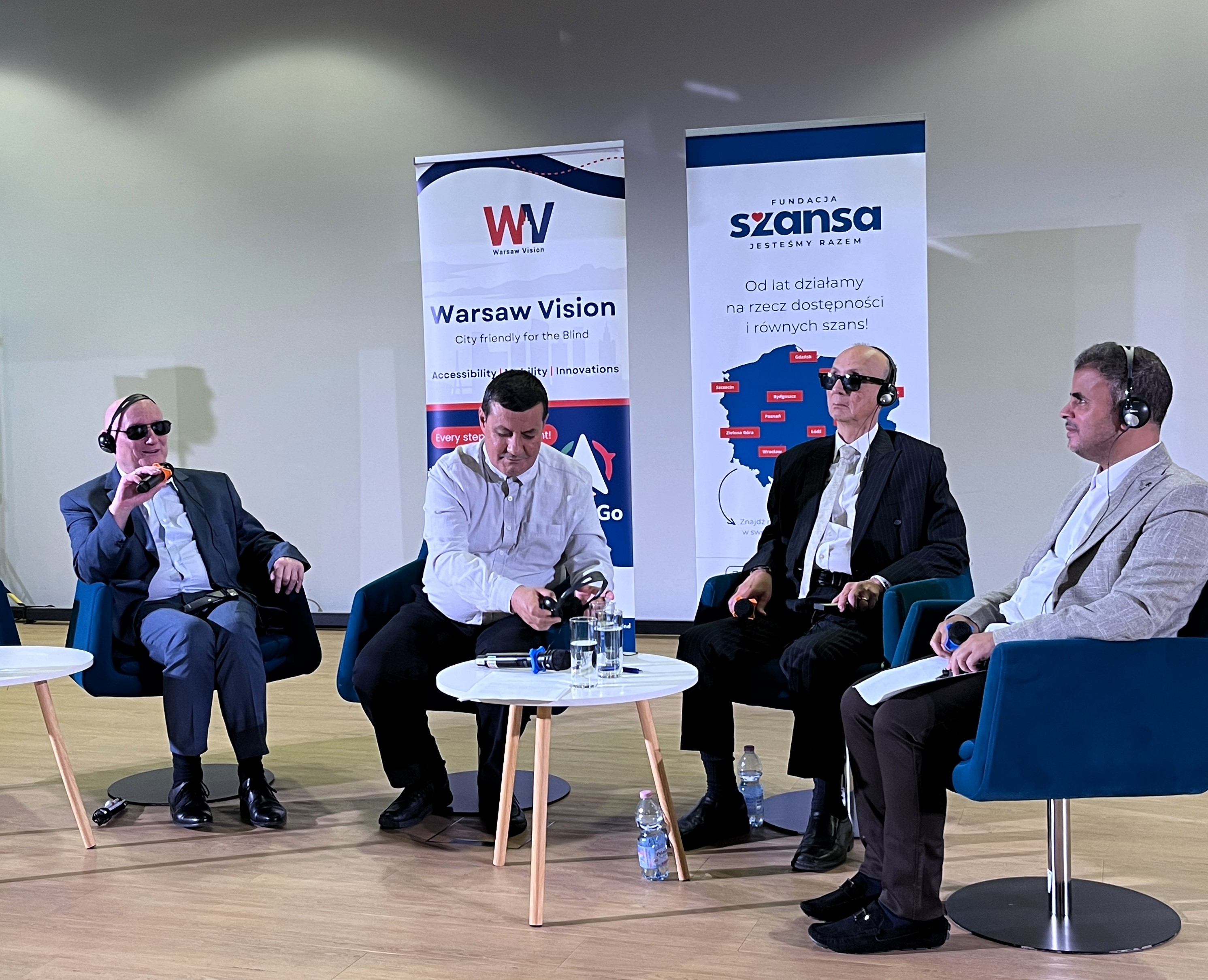
How can we create a city where blind and partially sighted people can navigate public spaces independently and safely? This question was at the heart of the third Warsaw Vision 2026 International Conference, “A City Friendly to the Blind”, held on 16 September at the Copernicus Science Centre in Warsaw.
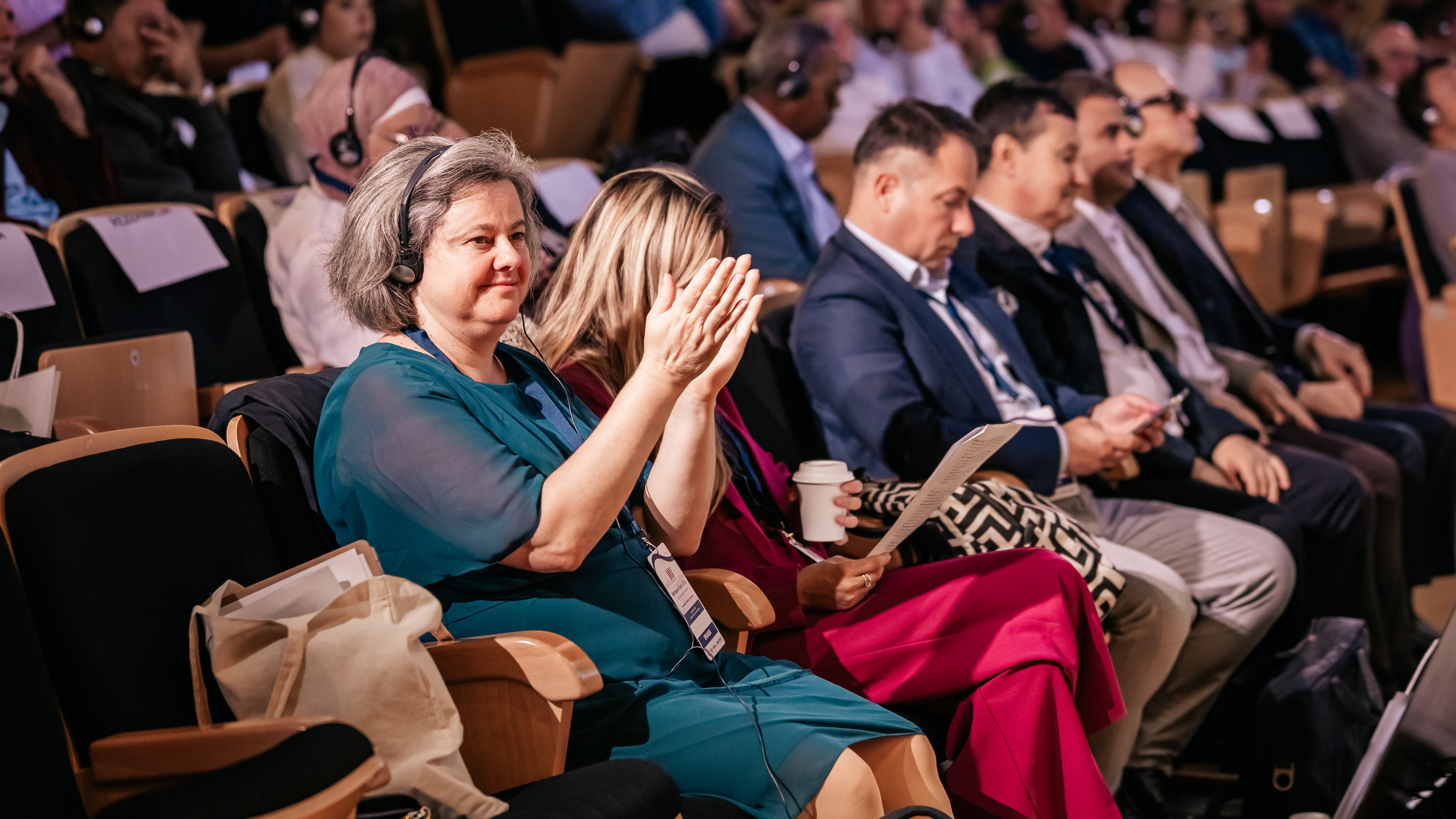
Warsaw Vision 2026, organised by the Chance Foundation We Are Together and the City of Warsaw, brought together experts and representatives of public administration, academia, business and civil society organisations from Poland and abroad. The conference welcomed delegations and guests from the United States, Türkiye, Israel, Armenia, Egypt, Greece, Romania, Austria, Hungary, Norway, Tunisia, Sweden, Belgium, Switzerland, Zanzibar and Madagascar.
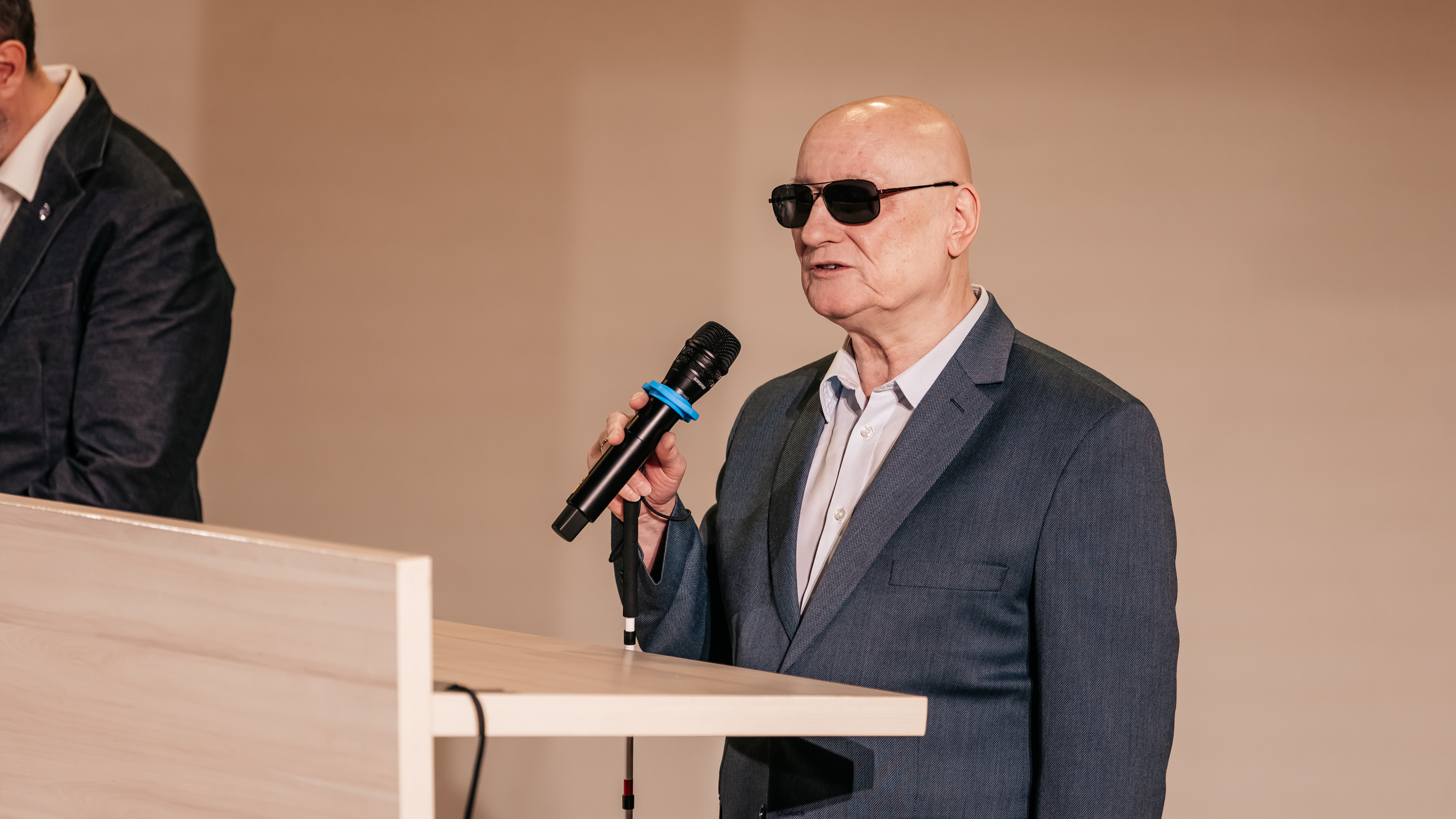
The conference was opened by Marek Kalbarczyk, President and Founder of the Chance Foundation We Are Together.
– It is a great honour to work with the institutions joining us here. We welcome guests from all over the world, representing leading organisations such as the World Blind Union and the Center for the Blind in Israel, as well as universities. I am incredibly happy to have the opportunity to welcome you here, to share what we are doing and to hear about your work on accessibility and equal opportunities for people with disabilities, in this case people with visual impairments – said Marek Kalbarczyk.
On behalf of the Warsaw authorities, the participants were welcomed by Donata Kończyk, Accessibility Representative of the Mayor of Warsaw.
– The activities carried out as part of the “Warsaw – A City Friendly to the Blind” project remind us that accessibility is not a one-off task. It is not something we can simply tick off a list. It is a process that requires dialogue, knowledge and the consistent search for and implementation of effective solutions – said Donata Kończyk.
Four Perspectives on Accessibility
The conference programme focused on four key areas.
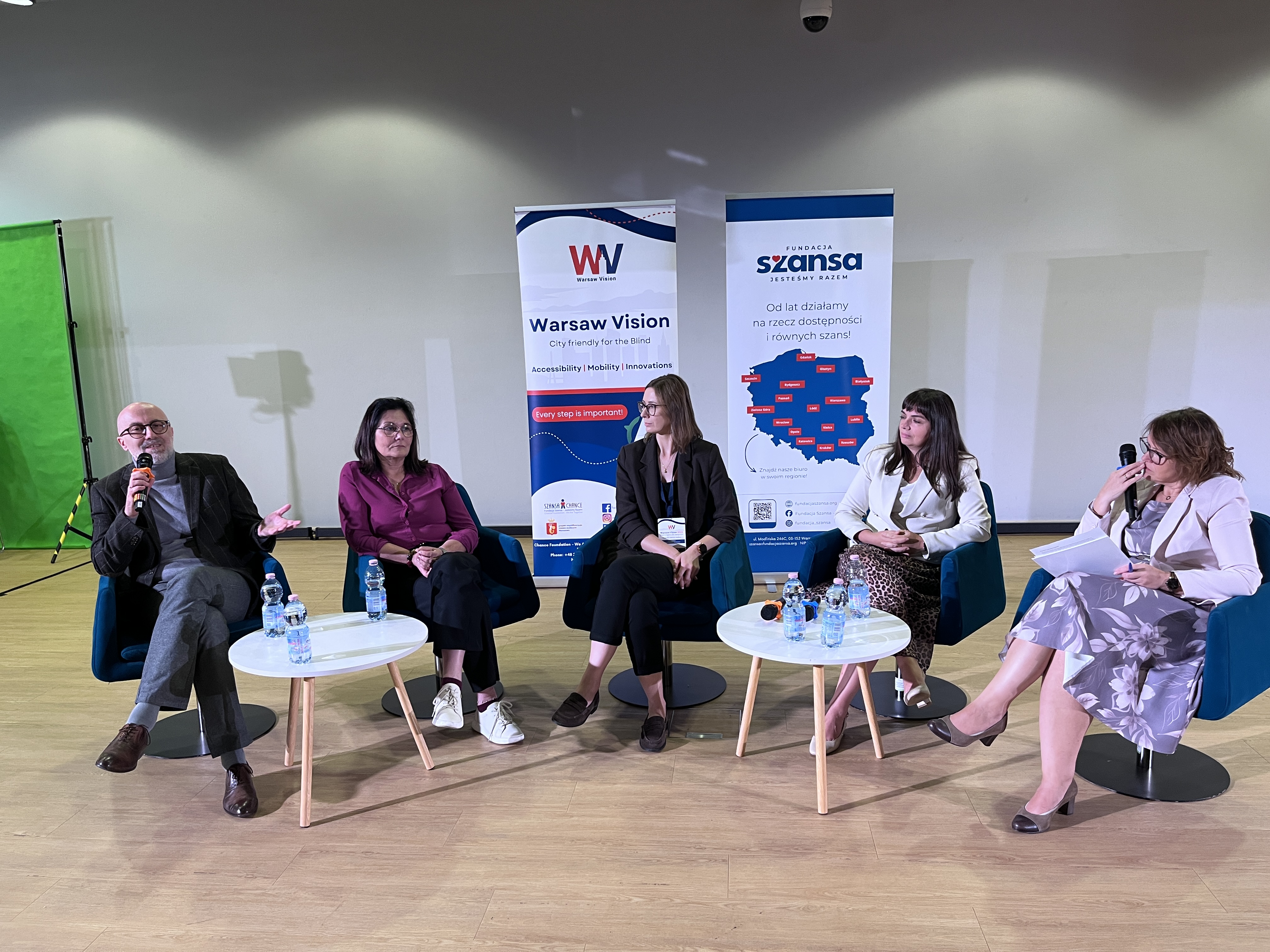
The “Accessibility in Poland”, dedicated to the practical aspects and experiences related to implementing accessibility in Poland, provided an opportunity to exchange experiences, present good practices, and discuss specific solutions and recommendations for creating a more accessible environment. An important part of the discussion also focused on the ongoing challenges related to the accessibility of public spaces, as well as the opportunities offered by new technologies and innovative solutions to improve accessibility.
During the “Mobility Without Barriers – Good Practices from Around the World” panel, experts presented solutions supporting orientation and independent mobility for blind and partially sighted people. An important part of the discussion was comparing experiences from different countries and considering which solutions could be successfully applied in other cities.
Speakers in the “From Need to Change – Research, Innovation and Practice” panel discussed how research and innovation can respond to users’ real needs. The conversation focused not only on what technology can do, but above all on whether specific solutions address real problems and increase people’s independence.
During the East–West Meeting “We Are Together”, representatives of different countries and communities shared experiences and solutions from their respective countries and discussed opportunities for international cooperation for people with disabilities. An important part of the meeting was identifying areas in which participants could learn from one another and work together to improve accessibility.
From Discussion to Experience
The conference also included presentations and practical activities. Participants could visit the “World of Touch and Sound” exhibition, learn about the history of the Chance Foundation WE Are Together, take part in an educational walk and workshops using the NawiGo application and test accessibility solutions presented at the Accessibility EXPO.
This gave the discussion on accessibility a practical dimension: participants could not only learn about different solutions but also experience how they work in practice.
What Comes After the Conference?
Warsaw Vision 2026 was not intended to provide a single answer to the question of what an accessible city should look like. Its value lay in bringing together experiences from different countries and communities, presenting innovative solutions and creating opportunities for further cooperation.
Participants were able to exchange knowledge and practical solutions that could be developed and implemented both in Warsaw and in other cities represented at the conference.
The discussions addressed specific challenges related to independent mobility, orientation in public spaces, access to information and technology, as well as the ability to use public services and urban spaces independently.
– We have come from different parts of the world, and we understand that international cooperation will be a driving force in strengthening the rights of people with disabilities. After this conference, I have a clearer picture of Poland’s efforts in the field of disability rights, and I have learned about many interesting solutions worth exploring. I am confident that Warsaw Vision participants will return to their countries with solutions that they can put into practice – said Prof. Selahattin Aydin, participant of the East–West Meeting.
We would like to thank all speakers, moderators, international delegations and participants of Warsaw Vision 2026 for their participation and for sharing their knowledge and experience.
Warsaw Vision 2026 marked the conclusion of this year’s activities carried out as part of the “Warsaw – A City Friendly to the Blind” project, implemented by the Chance Foundation We Are Together and co-financed by the City of Warsaw.